Types of climbing explained: bouldering, top rope, lead, auto-belay and more
Updated 7 October 2026
Climbing comes in a few main styles. Bouldering is short climbs over mats with no rope; top rope and auto-belay climbing use a rope that’s already anchored above you; in lead climbing you clip the rope into the wall as you go. Outdoors the same ideas become bouldering, sport, trad and multi-pitch climbing. Most people start indoors, with bouldering or top rope.
Indoor bouldering
Climbing short walls, only a few metres high, with no rope or harness. A thick padded floor catches you when you fall or let go, and each climb is a short sequence of moves called a “problem”.
- Gear: climbing shoes (rentable). Chalk is optional.
- How to try it: buy a day pass, rent shoes and listen to the short safety briefing.
- Who it suits: anyone. You can go alone, and it’s sociable: people take turns on the same problems and share tips.
Auto-belay
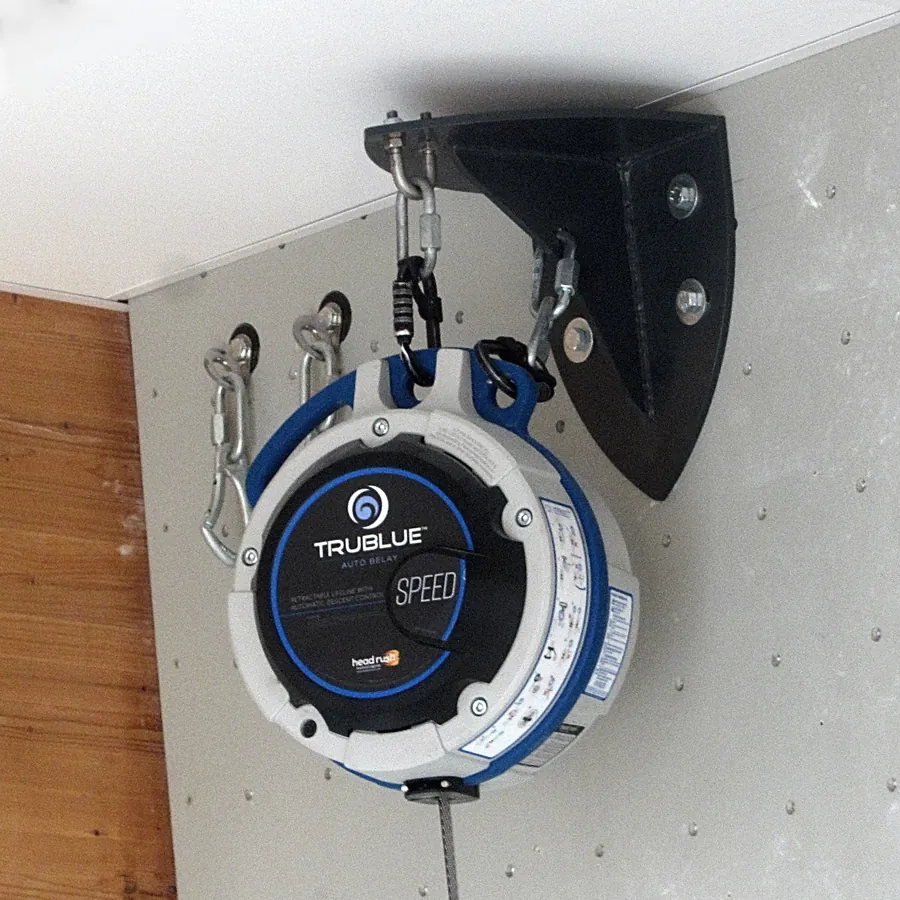
An auto-belay is a device fixed at the top of a wall. You clip its strap or cable to your harness, and it takes in the slack as you climb. When you fall or sit back, it lowers you slowly to the ground. It lets you climb a full-height wall without a partner.
- Gear: shoes and a harness (both rentable).
- How to try it: most gyms show you how to use them in their induction or intro session.
- Who it suits: anyone who wants to try climbing on a tall wall without learning to belay, or climb on their own.
- The one rule: check you’re clipped in before every climb. Forgetting is behind most serious auto-belay accidents.
Top rope
The rope runs from your harness up to an anchor at the top of the wall and back down to your belayer, who takes in the rope as you climb. If you fall, you just hang on the rope. It’s one of the safest ways to climb and the way most people learn to climb with ropes.
- Gear: shoes and a harness for the climber; a belay device and locking carabiner for the belayer. All rentable, and gyms leave ropes hanging on the wall.
- How to try it: book a taster session, where an instructor belays you, or a learn-to-climb course that teaches you to tie in and belay. Then pass the gym’s belay check to climb without staff.
- Who it suits: people who like longer routes and a bit of height, and a friend to climb with.
Lead climbing
You start with the rope at the bottom and clip it into quickdraws on the wall as you climb. If you fall, you fall past your last clip: three metres above it means a fall of about six metres before the rope starts to hold you, plus some rope stretch. It’s more exciting than top rope, and riskier, so both climber and belayer need extra training.
- Gear: the same as top rope, plus a rope. Indoors, the quickdraws are usually already on the wall.
- How to try it: once you’re comfortable on top rope, take a lead course. Gyms ask for a separate lead belay check.
- Who it suits: top-rope climbers ready for the next step. It’s also how you climb outside on sport routes.
Outdoor bouldering
The same thing on real boulders. Instead of a padded floor you carry crash pads, foam mats you place under the problem, and a spotter helps steer your fall onto them. The landings are uneven, so it takes more care than in a gym, but it’s the easiest kind of climbing to take outside.
Sport climbing
Lead climbing on rock, using bolts drilled into the rock for protection. You clip your quickdraws to the bolts as you climb, and at the top you lower off from an anchor. You need a harness, shoes, a belay device, a rope long enough for the route, quickdraws, a few slings and screwgate carabiners, and a helmet. You also need to know how to thread the anchor at the top, so practise it on the ground before you try it on a route.
Trad climbing
Traditional climbing has no bolts. The leader places removable protection, such as nuts and cams, in cracks as they climb, and the second climber takes it out on the way up. On top of sport-climbing gear you need a rack of nuts, cams and slings, and the skill to place them so they’ll hold a fall. It’s the most complex style for a beginner; learn it on a course or from an experienced climber.
Multi-pitch climbing
Routes too long for one rope length, climbed in sections called pitches. The leader climbs to an anchor and belays the second up, and you repeat that to the top, often abseiling back down. Multi-pitch routes can be sport or trad, and they add anchor building, rope management and abseiling to everything above.
Speed and competition climbing
Competitions use three formats: bouldering, lead and speed. Speed climbing is a race on a standard 15-metre wall with the same route everywhere in the world, using an auto-belay. At the Paris 2024 Olympics there were two events, boulder-and-lead combined and speed; at LA28 boulder, lead and speed will each have their own medals.
At a glance
| Discipline | Gear you need | Partner needed? | Good first step? |
|---|---|---|---|
| Indoor bouldering | Shoes (rentable); chalk optional | No | Yes, the easiest start |
| Auto-belay | Shoes and harness (rentable) | No | Yes, after the gym’s induction |
| Top rope | Shoes, harness, belay device, locking carabiner (rentable) | Yes, a belayer | Yes, with a taster session or course |
| Indoor lead | Top-rope gear plus a rope | Yes, a lead-trained belayer | No, learn top rope first |
| Outdoor bouldering | Shoes, chalk, crash pads | Best with a spotter | After indoor bouldering |
| Sport climbing | Lead gear plus quickdraws, slings, helmet | Yes | After indoor lead, ideally with someone experienced |
| Trad climbing | Sport gear plus nuts, cams and more slings | Yes | No, take a course |
| Multi-pitch | Sport or trad gear, plus what you need to build anchors and abseil | Yes | No, take a course |
Which one should you try first?
Bouldering, if you want to just turn up and climb. Top rope or auto-belay, if you’d like height and don’t mind booking a session. Plenty of people do both. Boulder grades and route grades work differently, so don’t compare them directly; bouldering vs sport grades explains why.
When you’re ready to go outside, climb with someone more experienced or book an instructor, and pick routes well below your gym grade at first. Our crag check shows the best temperatures for a crag and how much rope and how many quickdraws to bring.
Sources
- Wikipedia: Climbing
- Wikipedia: Bouldering
- Wikipedia: Top-rope climbing
- Wikipedia: Lead climbing
- Wikipedia: Multi-pitch climbing
- Wikipedia: Auto belay
- Wikipedia: Speed climbing
- Wikipedia: Sport climbing at the 2024 Summer Olympics
- World Climbing: Olympic Games LA28
- BMC: The basics: climbing indoors
- BMC: What gear do you need to climb outdoors?
- BMC: Top tips for new outdoor climbers
- BMC: How to move from indoor to outdoor climbing
- Mountaineering Scotland: Indoor climbing, getting started
- DAV: Automatisch sicher? Climbing with auto-belays
- DAV: Indoor climbing certificates (Kletterscheine)
Read more
- How to start climbing: a beginner’s guide
- Is climbing safe? How to climb safely as a beginner
- Why are there so many climbing grade systems?
- Bouldering grades explained: the V-scale and Font
- Sport climbing grades explained: French, YDS and UIAA
- Can you compare bouldering and sport climbing grades?
- The hardest boulders in the world (2026)
- How hard is V17?
- How long does it take to climb V5?
- Stuck at V4 or V5? Why climbers plateau, and what helps